
Sipariş listesinde ürün yok
Ürün başarıyla alışveriş sepetinize eklendi
Sepetinizde 0 ürün bulunmaktadır. Sepetinizde 1 ürün bulunmaktadır.
EĞİTİM BİLİMLERİ
- Tıp Kitapları
- Acil Tıp
- Adli Tıp ve kriminoloji
- Aile Hekimliği
- Alerji ve İmmünoloji
- Anatomi Kitapları
- Anesteziyoloji ve Ağrı Kitapları
- Biyoloji ve Genetik Kitapları
- Biyomedikal Mühendisliği
- Biyokimya Kitapları
- Çocuk Cerrahisi
- Çocuk Sağlığı ve Hastalıkları Kitabı
- Çocuk ve Ergen Psikiyatrisi
- Dahiliye Kitapları
- Dermatoloji Kitapları
- Endokrinoloji Kitapları
- Farmakoloji Kitapları
- Fiziksel Tıp ve Rehabilitasyon
- Fizyoterapi, Rehabilitasyon ve Spor Hekimliği
- Fizyoloji Kitapları
- Gastroenteroloji Kitapları
- Geleneksel ve Tamamlayıcı Tıp
- Genel Cerrahi Kitapları
- Geriatri
- Göz Hastalıkları
- Göğüs Hastalıkları
- Göğüs Cerrahisi
- Halk Sağlığı Kitapları
- Hematoloji Kitapları
- Histoloji ve Embriyoloji Kitapları
- İnfeksiyon Hastalıkları
- Kadın Hastalıkları ve Doğum
- Kardiyoloji Kitapları
- Kalp Damar Cerrahisi
- Kulak Burun Boğaz Hastalıkları
- Mikrobiyoloji immunoloji Kİtapları
- Nöroşirürji
- Nefroloji
- Nöroloji
- Nükleer Tıp
- Onkoloji
- Ortopedi ve Travmatoloji
- Patoloji Kitapları
- Plastik Cerrahi
- Psikiyatri
- Radyasyon Onkoloji
- Radyoloji
- Romatoloji
- Sağlıklı Yaşıyoruz
- Spor Hekimliği
- Tıp Tarihi ve Tıp Etiği
- Tıbbı İstatistik Araştırma
- Tıp ve Sağlık Hukuku
- Tıbbi Laboratuvar Deney Bilimi
- USMLE & Board Review
- Uyku Tıbbı
- Üroloji
- Yoğun Bakım
- Diş Hekimliği Kitapları
- Eczacılık Kitapları
- Beslenme ve Diyet Kitapları
- Veteriner Hekimlik
- DUS Kitapları
- DUS Akademi Konu Kitapları Serisi
- DUS için Açıklamalı Deneme Sınavları Serisi
- DUS Rapidus Kampı
- Miadent Konu Kitapları Serisi
- Prodent Soru Kitapları Serisi
- DUS Çıkmış Soru Kitapları
- DUSDATA Şampiyonların Notu
- DUS Review Serisi
- DUSDATAMAX Soru Kitapları Serisi
- DUS Akademi Soru Kitapları Serisi
- Diğer Kitapları Serisi
- TUS Kitapları
- Çıkmış TUS Soru Kitapları
- TUS Deneme Serisi
- MEDOTOMY Serisi
- Tusmer
- Klinisyen Konu Kitapları Serisi
- Optimum Serisi
- Premium Serisi
- PRETUS Deneme Sınavları Serisi
- ProspekTUS Serisi
- Klinisyen Soru Kitapları Serisi
- Tusdata TUS Şampiyonların Notları
- Tıbbi İngilizce
- Vaka Soruları Serisi
- Tüm Tus Soruları
- Hızlı Tekrar Serisi
- SpeeTUS Kampı Serisi
- KAMP ÖZEL NOTLARI
- Meditus Serisi
- TUSDER
- YDUS Kitapları
- Hemşirelik ve Ebelik kitapları
- HEMŞİRELİK / halk sağlığı
- HEMŞİRELİK / Hemşirelik Esasları
- HEMŞİRELİK / İç Hastalıkları
- HEMŞİRELİK / Cerrahi Hastalıkları
- HEMŞİRELİK / Kadın hastalıkları ve doğum Ebelik
- HEMŞİRELİK / Ruh Sağlığı ve Hastalıkları
- HEMŞİRELİK / Hemşirelikte Eğitim
- HEMŞİRELİK / Çocuk Sağlığı ve Hastalıkları
- HEMŞİRELİK / Acil tıp hemşireliği
- SAĞLIK BİLİMLERİ
- Çocuk Gelişimi
- Sağlık Yöneticiliği
- Optisyenlik
- Odyoloji
- Saç Bakımı ve Güzellik Hizmetleri
- Anestezi Teknikerliği
- Tıbbi Dökümantasyon ve Sekreterlik
- Tıbbi Laboratuvar Teknisyenliği
- İş Sağlığı ve Güvenliği
- Ergoterapi
- Ağız ve Diş Sağlığı Teknisyenliği
- Dil ve Konuşma Terapisi
- İlk ve Acil Yardım Teknikeri (Paramedik)
- Radyoloji Teknisyenliği
- EĞİTİM BİLİMLERİ
- Değerler Eğitimi
- Eğitim Programları ve Öğretim
- Eğitim Psikolojisi
- Eğitim Yönetimi ve Denetimi
- Eğitimde Drama
- Eğitim Temelleri
- Eğitim Teknolojileri
- Okul Öncesi Eğitim
- Ortaokul Öğretmenliği
- Öğretmenlik Eğitimi Bölümleri
- Ölçme ve Değerlendirme
- Özel Eğitim
- Psikolojik Danışmanlık ve Rehberlik
- Sınıf Öğretmenliği
- Sınıf Yönetimi Etkili Öğretim
- Yabancı Dil Eğitimi
- İLETİŞİM
- İŞLETME
- İKTİSAT / EKONOMİ / MALİYE
- MİMARLIK - SANAT
- BİLİM TEKNİK
- MÜHENDİSLİK - TEKNİK
- FEN BİLİMLERİ
- ÇOCUK VE GENÇLİK KİTAPLARI
- BEŞERİ/SOSYAL BİLİMLER
- ÇEVRE ve YER BİLİMLERİ
- GIDA TARIM ve HAYVANCILIK
- BİYOMEDİKAL MÜHENDİSLİĞİ
- SEYAHAT TURİZM
- SOSYAL ÇALIŞMALAR
- SPOR BİLİMLERİ
- YÖNETİM - SİYASET - ULUSLARARASI İLİŞKİLER
- SINAVLAR HAZIRLIK
- ÖNERİLEN ÜRÜNLER
- Çok Satan Romanlar
- E-Kitaplar
- AYBAK
- Kırtasiye
- Yabancı Dil Eğitimi
- AYBAK 2025 Bahar
 Daha büyük görüntüle
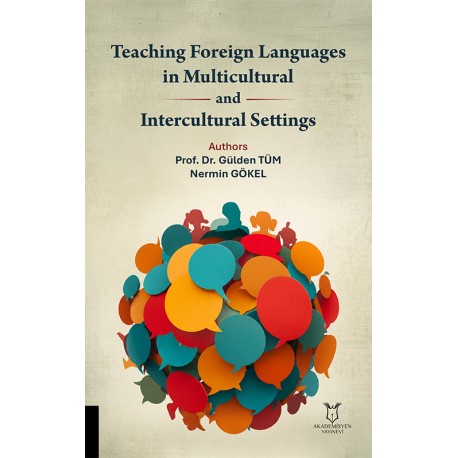
Teaching Foreign Languages in Multicultural and Intercultural Settings
9786253621322
100 Adet
400,00 TL
320,00 TL
-20%
KDV Hariç: 320,00 TL
- Yorum Yaz
TANITIM YAZISI
In foreign language education, individuals do not merely acquire
linguistic knowledge; they develop ways of understanding themselves,
others, and the social world. This book investigates beyond
the conventional boundaries of grammar, vocabulary, pronunciation,
and communicative competence. It approaches language
learning and teaching through the interrelated dimensions
of identity, culture, migration, multilingualism, intercultural
communication, social justice, and educational equity.
The book offers a comprehensive framework for understanding
foreign language classrooms as socially, culturally, and affectively
complex learning environments. It emphasizes the importance
of recognizing learners’ diverse linguistic repertoires, lived
experiences, cultural backgrounds, and forms of participation.
Designed for foreign language teachers, teacher educators,
researchers, graduate students, and curriculum developers, this
book provides both conceptual insight and practical direction for
developing more inclusive, critical, and responsive approaches
to foreign language education in multicultural societies.
The book contributes to current discussions on intercultural
language education by highlighting the ethical responsibility of
educators to create learning spaces in which learners’ voices are
acknowledged, differences are respected, and participation is
supported with dignity.
İÇİNDEKİLER
PREFACE
PART I
FUNDAMENTALS
CHAPTER 1
GLOBALITY, LANGUAGE, AND INTERCULTURAL
CLASSROOMS
1.1. Multicultural and Intercultural Classrooms
1.2. Language Ideologies and Power Dynamics
1.3. Globality in Multicultural and Intercultural Classrooms
1.4. Learner Backgrounds in Multicultural and Intercultural Classrooms
CHAPTER 2
THEORETICAL PERSPECTIVES ON LANGUAGE AND CULTURE
2.1. Sociocultural Theory and Language Learning
2.2. Intercultural Communicative Competence and Multilingualism
2.3. Plurilingualism and Translanguaging
2.4. Multiculturalism and Decolonial Language Learning
CHAPTER 3
IDENTITY, LEARNERS, AND DIVERSITY CLASSROOMS
3.1. Identity Construction in Language Learning
3.2. Heritage Learners and Translanguaging in Language Learning
3.3 Cultural Representation, Stereotypes, and Bias in Language Education
3.4. Building Belonging in Diverse Classrooms
PART II
METHODOLOGIES AND APPROACHES
CHAPTER 4
METHODOLOGIES FOR INTERCULTURAL LANGUAGE TEACHING
4.1. Communicative Language Teaching in Multicultural and Intercultural Classrooms
4.2. Intercultural Task-Based Language Teaching
4.3. CLIL, Disciplinary Inquiry, and Intercultural Learning
4.4. Experiential Learning and Project-Based Learning in Intercultural Language Education
CHAPTER 5
APPROACHES TO INTERCULTURAL PEDAGOGY
5.1. Critical Incidents and Case-Based Learning in Intercultural Pedagogy
5.2 Narration, Voice, and Identity in Intercultural Language Pedagogy
5.3. Mediation and Conflict in Intercultural Classrooms
5.4. Telecollaboration and Virtual Exchange in Intercultural Pedagogy
CHAPTER 6
INCLUSIVE AND CULTURALLY RESPONSIVE PEDAGOGY
6.1. Teaching Diverse Learners
6.2. Emotional Dimension and Trauma-Informed Language Pedagogy
6.3. Equity-oriented and Racial Equity Language Teaching
6.4. Classroom Climate and Community Building
CHAPTER 7
CEFR, AND MEDIATION IN INTERCULTURAL CLASSROOMS
7.1. CEFR Mediation Descriptors
7.2. Translanguaging as a Learning Strategy
7.3. Mediation in Multilingual Group Work
7.4. Designing Mediation Focused Tasks
REFERENCES
| ISBN | 9786253621322 |
| Basım Yılı | 2026 |
| Sayfa Sayısı | 201 |
| Yazar(lar) | Gülden TÜM Nermin GÖKEL |